The bathroom is the most dangerous room in the home for older adults. Wet surfaces, limited space, and the need to stand, pivot, and balance while undressed create a perfect storm for falls. According to the CDC, approximately 235,000 Americans visit emergency rooms each year due to bathroom-related injuries, and adults 65 and older account for the majority of the most serious cases. The good news: most bathroom hazards can be addressed with targeted, affordable modifications.
Grab Bars: The Single Most Important Safety Addition
Properly installed grab bars are the most evidence-backed bathroom modification for fall prevention. They should be placed at three key locations: next to the toilet (typically 33 to 36 inches from the floor), inside the shower or tub at entry level, and on the wall of the shower for support while standing. Bars must be anchored into wall studs or with toggle bolts rated for the appropriate weight — suction cup grab bars are not a safe substitute for permanent installation.
Professional installation of two or three grab bars typically costs $200 to $600, including materials. Many Area Agencies on Aging and local nonprofits offer free installation programs for low-income seniors. Check with your local senior center or call 1-800-677-1116 (Eldercare Locator) to find programs in your area.
Walk-In Tubs: Eliminating the Biggest Hazard
Stepping over a standard bathtub rim — often 15 to 20 inches high — is genuinely hazardous for seniors with balance or mobility issues. Walk-in tubs solve this by featuring a door that opens inward, allowing you to step in over a threshold of just a few inches, then close the door and fill the tub while seated. Modern walk-in tubs include built-in seats, anti-slip flooring, handheld shower wands, and optional therapeutic jets.
Walk-in tub installation costs vary widely: $3,000 to $10,000 for standard models plus installation, and $8,000 to $20,000 for premium therapeutic models. Key considerations include whether you have a caregiver to assist (you must wait for the tub to drain before opening the door to exit), water heater capacity, and the structural requirements of your bathroom floor.
Walk-In Showers: The Accessible Alternative
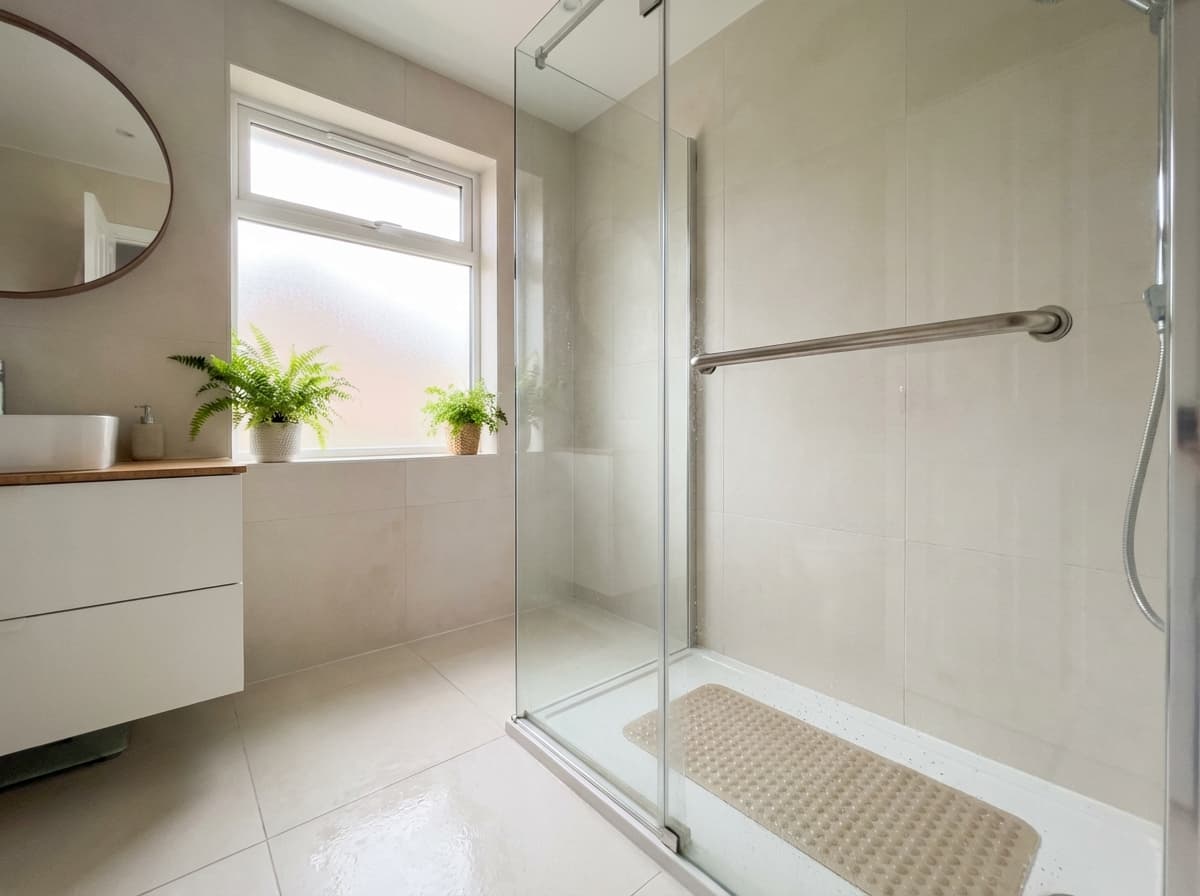
For many seniors, a barrier-free or low-threshold walk-in shower is more practical than a walk-in tub. Converting a standard tub to a roll-in or walk-in shower eliminates the step-over hazard entirely and accommodates a shower wheelchair if needed in the future. A tub-to-shower conversion typically costs $1,500 to $5,000, with prefabricated kits on the lower end and custom tile work on the higher end.
Non-Slip Surfaces: Simple but Critical
Non-slip bath mats with suction cup bottoms, applied inside the tub or shower floor, are a $10 to $30 modification that reduces slip risk meaningfully. Replace decorative rugs (a trip hazard) outside the shower with a non-slip bath rug with a rubber backing. Non-slip adhesive strips applied to the shower floor and the top of the tub rim provide additional traction for minimal cost.
Toilet Safety Modifications
- Raised toilet seat: adds 3 to 5 inches of height, reducing the distance needed to sit and stand ($25 to $100)
- Toilet safety frame / rails: bolted to the toilet for support when sitting and rising ($40 to $150)
- Height-adjustable toilet (comfort height): 17 to 19 inches versus standard 15 inches — a permanent solution for new bathroom installations
- Bidet attachment: reduces the need to twist and reach, lowering fall risk during hygiene ($30 to $600)
Lighting: An Overlooked Priority
Poor lighting at night is a leading contributor to bathroom falls. Motion-activated night lights plugged into outlets along the path from the bedroom to the bathroom ($10 to $30 each) ensure the route is illuminated without requiring fumbling for switches. Inside the bathroom, ensure overhead lighting is bright — at least 100-watt equivalent LED — and consider adding a nightlight near the toilet. A rocker or illuminated light switch is easier to find in the dark than a standard toggle switch.
Building a Safety Upgrade Priority Order
- First priority (immediate, low cost): non-slip mats, remove loose rugs, night lights
- Second priority (moderate cost): grab bars by toilet and in shower/tub
- Third priority (higher cost): raised toilet seat or toilet safety frame
- Fourth priority (major modification): tub-to-shower conversion or walk-in tub installation
You do not need to make every modification at once. Starting with the lowest-cost, highest-impact changes — non-slip mats and professionally installed grab bars — and working upward as budget allows is a practical approach. A licensed contractor who specializes in aging-in-place modifications can assess your specific bathroom and provide a prioritized estimate at no cost.