
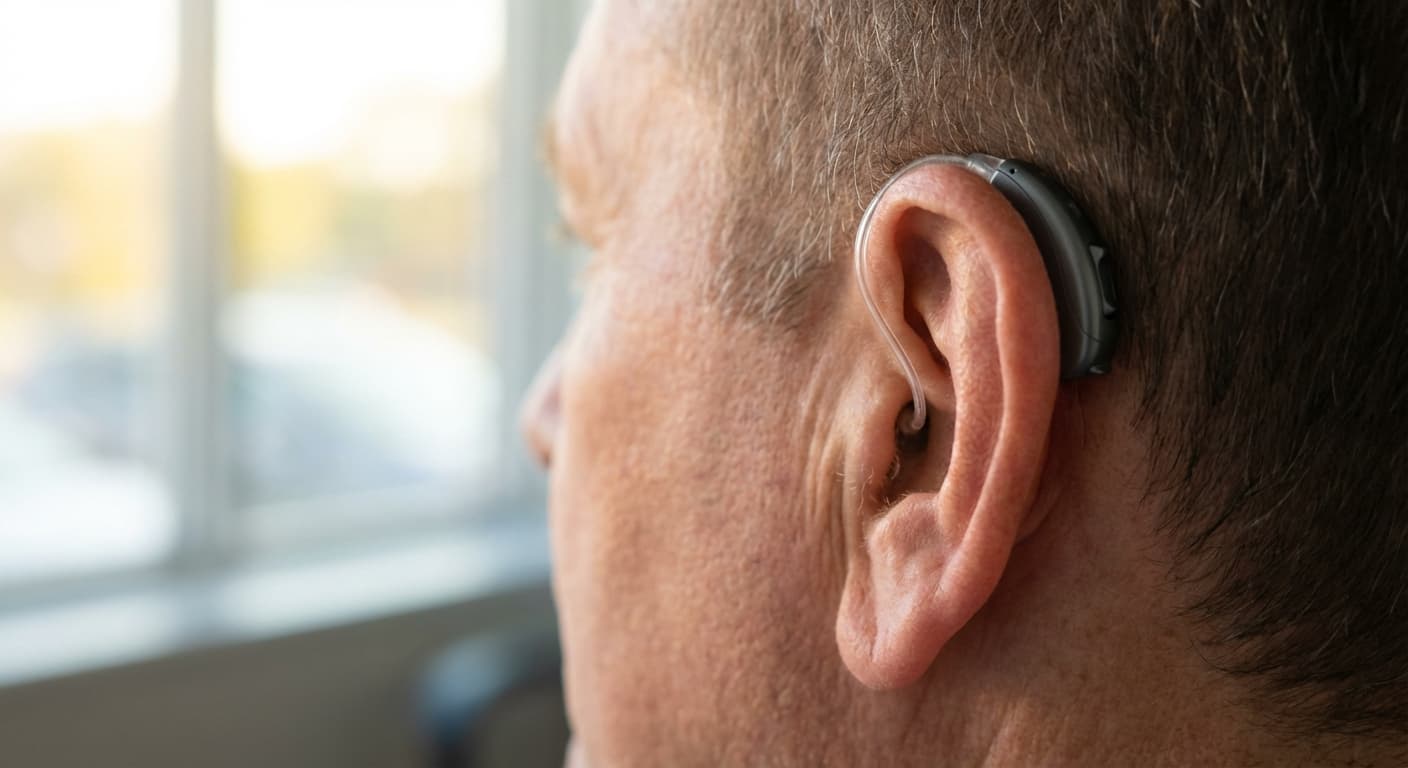
Approximately 48 million Americans have some degree of hearing loss. Yet only one in five who could benefit from hearing aids actually uses them — and cost is the primary barrier. Traditional prescription hearing aids have historically cost between $4,000 and $8,000 per pair. In October 2022, the FDA created a new regulatory category for over-the-counter hearing aids, allowing devices to be sold directly to consumers without a prescription or professional fitting. This ruling was designed to increase access and drive down prices. Here is what has changed — and what has not.
What Are OTC Hearing Aids?
Over-the-counter hearing aids are FDA-regulated devices sold directly to adults 18 and older with perceived mild to moderate hearing loss. They can be purchased at pharmacies, electronics stores, and online retailers without a hearing test, audiologist appointment, or prescription. Brands like Sony, Jabra, and Lexie now offer OTC devices ranging from $200 to $1,500 per pair — a dramatic reduction from traditional hearing aid prices.
What Are Prescription Hearing Aids?
Prescription hearing aids are dispensed by a licensed audiologist or hearing instrument specialist after a comprehensive hearing evaluation. They are programmed to match your specific hearing profile — frequency by frequency — and can be fine-tuned over time as your hearing changes. They are designed for mild through profound hearing loss. Ongoing adjustments, follow-up appointments, and professional support are included in the purchase (though practices vary by provider).
OTC vs. Prescription: Side-by-Side Comparison
- Cost: OTC ($200-$1,500) vs. Prescription ($2,000-$8,000 per pair)
- Hearing loss severity: OTC (mild to moderate only) vs. Prescription (mild through profound)
- Fitting: OTC (self-fitted via app) vs. Prescription (professional fitting and programming)
- Customization: OTC (limited, app-based adjustments) vs. Prescription (precise, audiologist-calibrated)
- Follow-up support: OTC (limited or none) vs. Prescription (ongoing professional support)
- Technology features: OTC (basic to moderate) vs. Prescription (advanced AI, directional mics, Bluetooth, rechargeable)
- Trial period: OTC (30-60 days typically) vs. Prescription (45-75 days typically)
Who Is a Good Candidate for OTC Hearing Aids?
OTC hearing aids are appropriate for adults who self-identify as having mild to moderate hearing difficulty — struggling to follow conversations in noisy environments, asking people to repeat themselves, or needing the TV louder than others prefer. They are best suited for people who are comfortable with technology, can download and use a smartphone app for adjustments, and want a lower-cost first step before committing to prescription devices.
When You Should See an Audiologist First
OTC devices are not appropriate for everyone. You should consult a licensed audiologist before purchasing any hearing aid if you experience any of the following:
- Sudden hearing loss or rapid progression of hearing loss
- Hearing loss in one ear only (asymmetric hearing loss)
- Ringing in the ears (tinnitus) accompanied by hearing loss
- Pain, drainage, or a feeling of fullness in the ear
- Significant difficulty hearing even with aids that have been adjusted
- Dizziness or vertigo accompanying hearing changes
- Hearing loss that impacts your work, safety, or daily functioning significantly
The Real Cost Comparison Over Time
While OTC devices are dramatically cheaper upfront, it is worth considering total cost of ownership. OTC devices typically last two to three years before needing replacement. High-quality prescription hearing aids can last five to seven years with professional maintenance. If an OTC device does not work well for your hearing profile and you ultimately need to see an audiologist anyway, you may spend more in total. For those with moderate to severe hearing loss, the superior outcomes of prescription aids often justify the higher upfront cost.
The best starting point for anyone experiencing hearing difficulty is an audiological evaluation. Many audiologists offer free or low-cost screenings. Knowing your actual degree and type of hearing loss helps you make an informed decision between OTC and prescription options — rather than guessing based on self-assessment.